Reflecting on the first year of Betchcott Hill

Reflecting on the first year of Betchcott Hill

(c) Chris Shein, Wyre Films

Head of Nature Reserves, Tom Freeland reflects on the achievements, challenges and lessons in the year since Shropshire Wildlife Trust started restoring Betchcott Hill.

Betchcott one year on: a personal reflection

I joined Shropshire Wildlife Trust in June 2024, and one of my first priorities was to kickstart the Betchcott Hill project, our ambitious plan to purchase 50 hectares of land and restore it for nature. Historically Wildlife Trusts have been known to purchase land to protect it, so taking on a restoration project of this scale was a big step for Shropshire Wildlife Trust. Colleagues had already secured a range of philanthropic loans and grants to buy the land, but we still had to finalise the sale and find the resources to create the reserve we wanted.  So what were the priorities?

  1. Securing the resources
  2. Safeguarding what made the site special
  3. Planning for improvements
  4. Getting key people on our side


SECURING RESOURCES

Taking on a project of this scale would need significant resources,  so we launched an appeal, and I found myself as a key ‘face’ for this, appearing in promotional videos, speaking on radio and TV, and talking directly to supporters. The amazing efforts of Trust staff and supporters struck a chord with so many people, locally and abroad, and raised a record amount for a Trust appeal.  This allowed us to get stuck in to improving the site straight away.

Cameraman records man walking through scrub

SAFEGUARDING WHAT MADE THE SITE SPECIAL

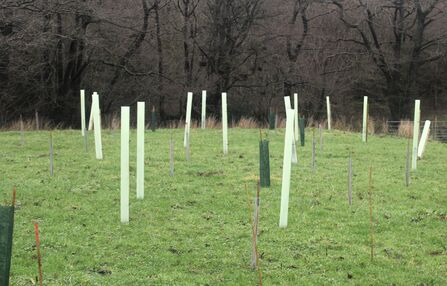
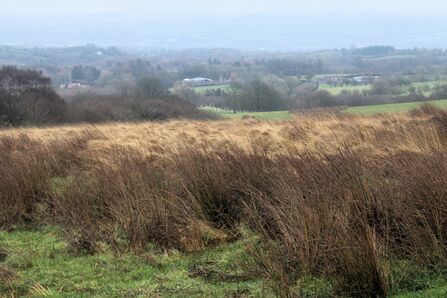
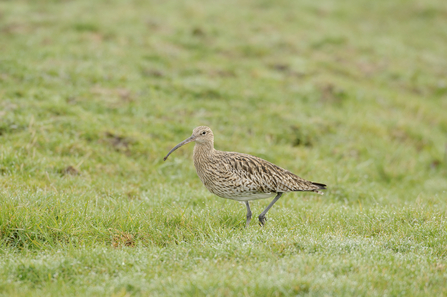
One of the things that makes Betchcott Hill special is the varied and complex ecology of the site with large areas of modified grassland mixed with some really special places for wildlife, including wet flushes, heathy scrub and wet woodland.  Top of the list for action was protecting the ground-nesting birds recorded on site, especially the iconic and fast-declining curlew.  First step was removing a conifer covert, planted as part of a short-lived shooting plan, but which now provided an ideal hideout for predators such as foxes and crows right next to the best nesting area.  We had to get a felling licence, which took time and pushed us right to the edge of felling season in late March.  It also stirred up some local controversy, with concerns over the timing and burning of the brash, but this  gave us an opportunity to restate our priorities and engage the local councillor and have some really meaningful local conversations.  Happily, the requirement in the felling licence to replant on site aligned with our desire to link up patches of wet woodland in another part of the site, providing new joined-up habitat in which wildlife can move about safely. The planting efforts also proved a popular task for both regular and corporate volunteers.

PLANNING FOR IMPROVEMENT

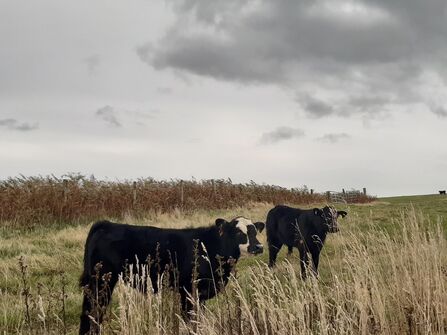
Some of our goals for the site do not come with such immediate gratification however. Returning the large areas of modified grassland to the original acid grassland typical of the best parts of the Long Mynd ridge, would take time and careful management.  First step was to return to tradition conservation grazing, moving from sheep to cattle and ponies, with aftermath grazing on the grassland post hay cuts, and spring grazing in the dingle.  With funds from the appeal, we invested in NoFence collars, so we could focus grazing exactly where needed, and started the process for securing cattle.  The drought of 2025 proved a challenge, with the natural water supply drying up on site, so it wasn’t until the autumn that we finally got the right stock on, and plugged the holes in the fences that were allowing neighbours’ sheep on.

Monitoring is vital to managing all of our sites. We are lucky to have a wide range of expert organisations in Shropshire, several of whom carried out baseline surveys in 2025, including flora, invertebrates and birds.  We are particularly fortunate to have an in-house team of expert volunteers, who visited twice, gathering key information and challenging us to review our progress carefully, including whether we can achieve acid grassland in all areas.  This is invaluable in adjusting our plans, and I’m looking forward to seeing the impact of green hay strewing and more ditch blocking this year. 

GETTING KEY PEOPLE ON SIDE

Betchcott is a remote site, but it’s still part of the popular Shropshire Hills, with regular use by walkers and riders on the historic Portway.  There are also people living and working all around the site, not least in nearby Picklescott village, and it was vital that we secured their support.  So I set off to meet as many as I could, from some early door-knocking to public events at Church Stretton and Picklescott Village Hall, both well attended with enthusiasm and offers to volunteer.  Not everyone was totally convinced with our plans, with a number of groups worried that promoting the site to visitors would disturb the nesting birds, and I led a number of site visits with interested groups, from our Trustees to the local wildlife group.  Plans were adjusted, with a new fence installed on the inside of the Portway enabling us to keep dogs contained and walkers away from the sensitive areas.  It has been inspiring to see how many people have already taken the site to their hearts, and I’m particularly looking forward to working with volunteers from the Strettons Branch to look after the reserve in the long term.

FINAL REFLECTIONS

It’s been a privilege to have the Betchcott project at the centre of my first 18 months at Shropshire Wildlife Trust.  It’s not always been a smooth ride, with the need to secure permissions and other priorities meaning it has taken longer than I’d hoped to see changes on site.  But it’s also been a huge learning experience, and I’ve relished the challenge of getting a nature reserve started from scratch, and seeing how it’s already inspiring so many people.  I can’t wait to see how it blooms.