Betchcott Hill Land Appeal
We're restoring Betchcott Hill
Nestled between the craggy outcrops of the Stiperstones ridge, and the imposing plateau of the Long Mynd, is a piece of land, 50 hectares in size. It neighbours the ancient Portway, and descends gradually to meet the rolling fields of the lowlands. Meadow pipits and skylarks flutter and parachute above, whilst a shy brown hare creeps through the grasses below, ears flat along its back, all as an unmistakable ‘cuckoo’ call drifts by on an upland breeze.
This is Betchcott Hill, with vast potential and pockets of valuable habitat, and home to some specialist species, not least a breeding pair of curlew.
Thanks to the overwhelming support of donors from near and afar, we are restoring Betchcott Hill for nature.
Slow and steady wins the race
From the moment we identified the opportunities for nature at Betchcott Hill, we knew that it would be a long and careful process to achieve widespread restoration. Undeterred, we have made swift progress of the quick wins.
On the grassland
We have returned to traditional conservation grazing practices and replaced the sheep with cattle from a local grazier. The trampling of the cattle's hooves and their eating habits is slowly disturbing the grassland in just the right way to see acid grassland species recolonising the hill.
In the wetland
We are installing leaky wood barriers in the ditch that runs down the middle of the site. Water that previously ran straight down this ditch is being slowed and allowed to spread across the site which will in time allow the existing wet flushes to expand and provide more habitat for wetland birds.
In the woodland
A stand of conifer trees at the bottom of the site once provided the perfect spot for predators to perch and target wetland birds in the nearby wet flushes. We have removed this stand of confiers and used the wood to create the leaky wood barriers on site. Nearby, we have planted 600 native tree species which, as they mature, will create a vital stepping stone for wildlife between a woodland area on a neighbouring site and the wet woodland in The Dingle at Betchcott Hill.
Responsible access
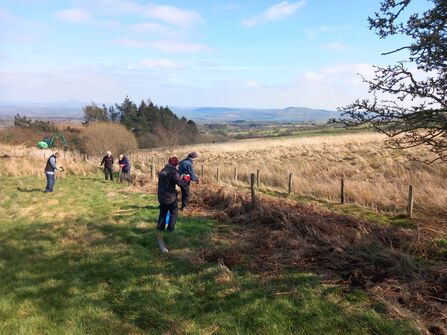
Updating the fencing site has been a key early priority at Betchcott Hill. We have removed internal fencing to allow better connectivity across parts of the site. Around the perimeter we have replaced old fencing and installed new boundary fencing to make Betchcott Hill a place that people can enjoy, while preventing disturbance of the wildlife on site.
Volunteer power
None of the above would have been possible without the dedication and effort of our reserves work parties and corporate volunteers. Wind, rain and shine, our volunteers have been unwavering in their comitment to helping to restore Betchcott Hill.
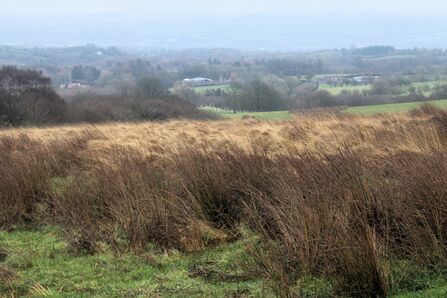
The wet flushes which provide habitat for curlew
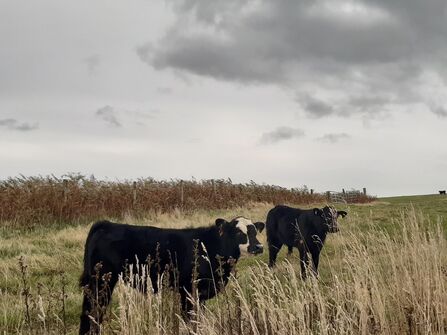
Grazing cattle provided by Matt
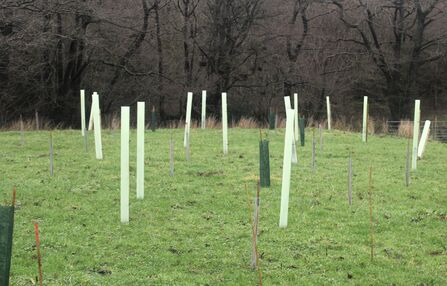
Some of the 600 trees planted at Betchcott Hill by dedicated volunteers.