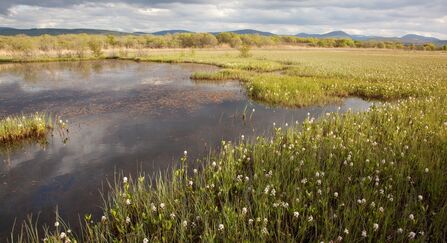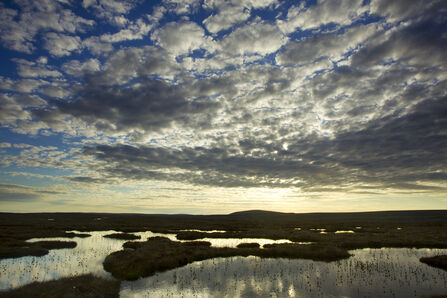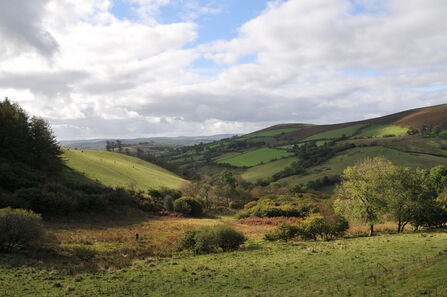

Peatlands - often overlooked, but vital for wildlife, climate, and water - and are the focus of a new, ambitious collaboration.
We are pleased to announce the formation of a Marches Peat Partnership, bringing together partners and stakeholder across the Marches region who have an interest in peatland restoration and management, sustainable land use on peat, farmed peatland, and the environmental services provided by peat.
Stretching across Shropshire and beyond, the Marchs region is rich and varied.
The Marches region encompasses Shropshire, Shropshire’s geographically linked catchments, some of which are cross border, and other areas geographically linked by peat deposits. The region includes upland peat in the upper Severn catchment in Wales, lowland peat of the Meres and Mosses region of Cheshire and Shropshire, as well as peaty deposits in the South Shropshire Hills.
Partner organisations are bringing together a wealth of collective knowledge and experience around peatland functionality, ecohydrology, paludiculture, and peat restoration.
Partners include:
- Shropshire Wildlife Trust
- Harper Adams University
- Environment Agency
- Aqualate Estate
- Severn Rivers Trust
- Local Nature Recovery Strategy (Shropshire Council)
- Natural England
- Shropshire Hills National Landscape Team
- Montgomeryshire Wildlife Trust
- Strine Internal Drainage Board
- Faulkner & Mayne Sustainable Agriculture Ltd
- H Fraser Consulting Ltd
- Rigare Ltd
- Severn & Wye Nature
- Shropshire Water Forum CIC
- Local farming representatives.
Peatlands have a key role to play in nature’s recovery, and the Marches Peat Partnership recognises that peatland preservation and restoration requires collaboration among stakeholders. Our shared vision in the Marches, is of a mosaic of sustainably managed and sustainably farmed peatland areas, plus areas of fully restored peatland. This vision considers the unique biodiversity, and rural and agricultural landscape of the region.
As a partnership, we aim to positively shape the future of peat in the Marches for people, farming, businesses, and wildlife. Providing a more powerful and coherent voice for peatlands across the Marches, to have greater influence on policy makers, regional and national stakeholders, businesses, local government and the public. A holistic partnership approach towards this vision will support and enable our peatlands to provide other catchment-wide environmental services and benefits, including water quality improvements, flood attenuation, an increase in biodiversity, and a reduction in greenhouse gas emissions. Working collaboratively as a partnership will allow for the aggregation of opportunities to work at scale, and collaboration to build knowledge and support for peat habitat protection.
The Partnership is currently applying for funding to support project development to demonstrate how once degraded peat can be restored and sustainably managed. Landscape-scale delivery will be enabled by facilitating the aggregation of opportunities for potential business investment. We also aim to support farmers to continue the transition towards sustainable land management practices on peat, or explore restoration where appropriate, balancing food production with nature-friendly approaches.