
From Hares to Rabbits
Interestingly, the story doesn’t start with rabbits at all—but with hares.
©Jon Hawkins
Interestingly, the story doesn’t start with rabbits at all—but with hares.
Hares are native to Britain and have long held a place in our folklore. Rabbits, on the other hand, were introduced much later by the Normans.
Both animals share one important trait: they reproduce quickly and in large numbers. Because of this, they became powerful symbols of fertility, new life, and renewal—perfectly matching the energy of springtime, when the natural world bursts back into life after winter.
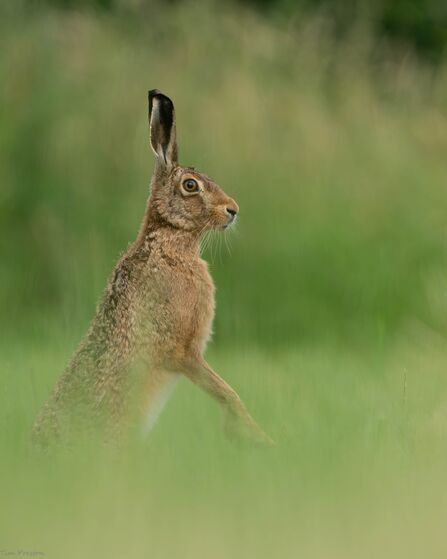
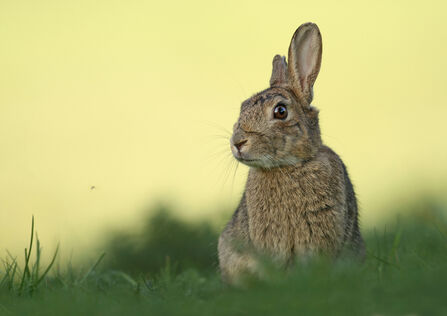
©Jon Hawkins
The roots of the Easter Bunny are often traced back to early Germanic traditions and a spring goddess named Eostre (sometimes called Ostara).

Ostara by Johannes Gehrts
Eostre was associated with fertility, dawn, and renewal.
Hares were believed to be sacred to Eostre, and alongside them, eggs were also important symbols—representing new beginnings and the promise of life. Spring festivals were held in her honour, celebrating the changing season and the return of warmth and growth.
By around the 9th century, as Christianity spread across northern Europe, many older pagan traditions began to fade. However, they didn’t disappear entirely.
Instead, elements of these springtime celebrations—like hares and eggs—were gradually absorbed into the Christian festival of Easter, which celebrates the resurrection of Jesus and the theme of new life.
Even the name “Easter” is thought to be linked to Eostre, showing just how closely these traditions became intertwined.
The idea of a bunny bringing eggs is a more recent twist.

In the 1600s, German folklore began to mention the “Oschter Haws” (Easter Hare), a magical creature that would lay colourful eggs for well-behaved children.
When German immigrants brought this tradition to other parts of the world, it evolved into the Easter Bunny we know today—less hare, more rabbit, but still delivering treats and joy each spring.
At its heart, the Easter Bunny can be seen as more than just a fun tradition—it’s a reminder of the natural rhythms of the seasons!
Rabbits and hares, with their energy and abundance, reflect the incredible renewal happening all around us at this time of year.
So next time you spot a bunny (chocolate or real!), it’s worth remembering that you’re looking at a symbol with roots stretching back hundreds of years—connecting nature, folklore, and celebration in one small, fluffy package.